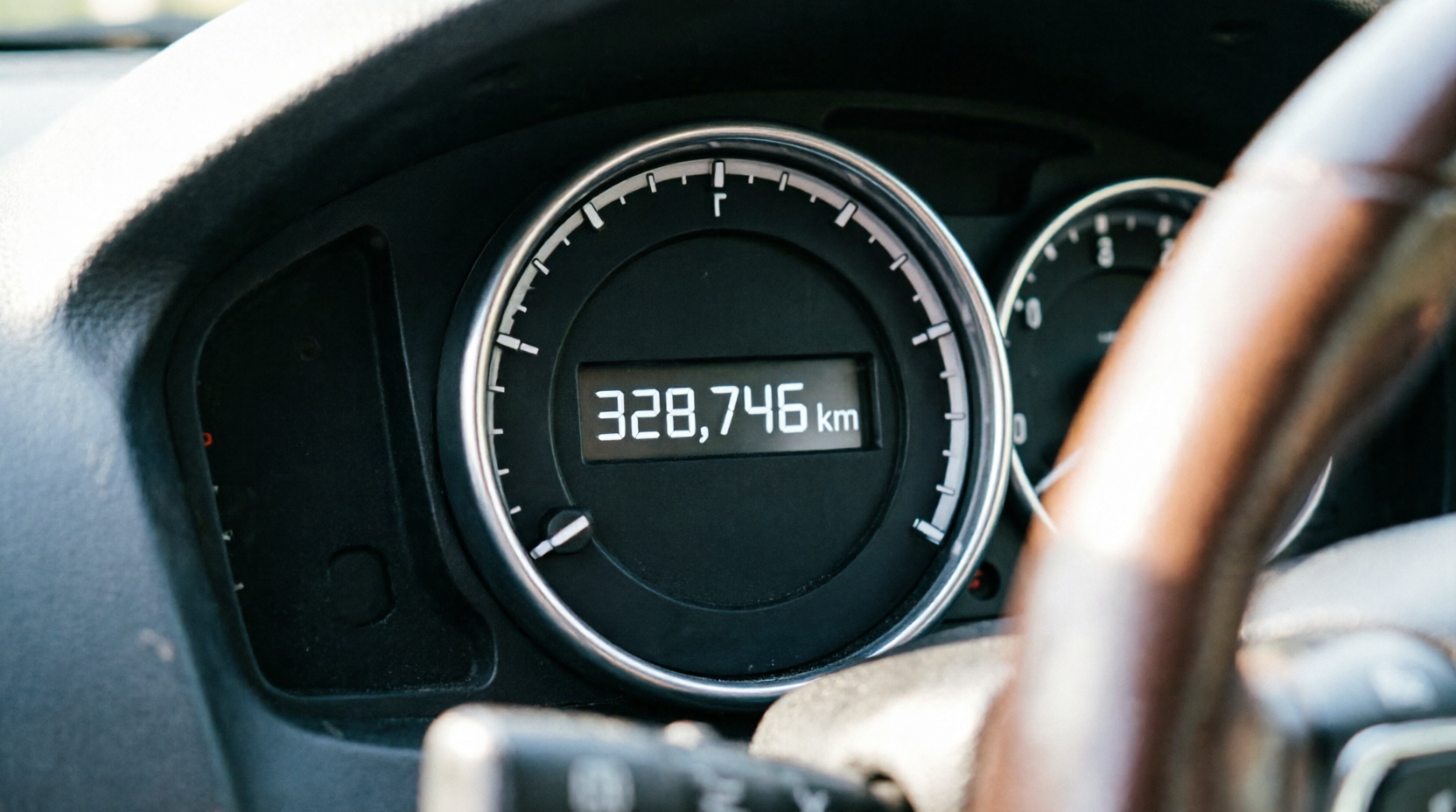
When you're buying a used car, mileage is one of the first numbers you look at. But here's what most buyers don't realise: the number itself tells you almost nothing.
What matters is whether that number makes sense — against the car's age, its MOT history, and the pattern of how those miles were accumulated. Get that analysis wrong, and a "low mileage" car can cost you far more than a high-mileage one.
This guide shows you exactly how to think about mileage — and where most buyers make expensive mistakes.
What is the average mileage per year in the UK?
The UK average is approximately 7,000 to 8,000 miles per year for a private car — roughly 135–155 miles per week, or around 19–22 miles per day.
Quick reference: expected mileage by age
2 years old → ~14,000–16,000 miles
5 years old → ~35,000–40,000 miles
8 years old → ~56,000–64,000 miles
10 years old → ~70,000–80,000 miles
15 years old → ~105,000–120,000 miles
If a car's mileage is significantly below or above these figures, it's worth understanding why before you commit.
Low mileage isn't always a good thing
This surprises a lot of buyers. Surely fewer miles means less wear?
Not always. Short, frequent urban journeys are actually harder on an engine than longer motorway runs — oil doesn't fully warm up, moisture builds in the exhaust, and brakes and clutch wear faster in stop-start traffic. A car covering 5,000 urban miles per year may have more internal wear than one doing 12,000 motorway miles.
Very low annual mileage can also mean the car sat unused for long periods — increasing the risk of seal deterioration, stale fuel, and flat spots on tyres.
High mileage isn't always a bad thing
A well-maintained high-mileage car is often a better buy than a neglected low-mileage one. German diesel estates with 150,000 motorway miles and a full service history are a staple of the used car market for good reason — consistent use keeps engines in good mechanical order.
What matters more than the total mileage is whether the car was maintained through those miles — and whether the MOT history reflects the wear patterns you'd expect.
What's a good mileage for a used car?
There's no single answer — but here's a practical framework:
- Under average for its age — good, if the service history supports it and annual mileage is consistent year on year
- Around average for its age — normal. Focus on condition and maintenance history rather than the number itself
- Above average for its age — not a dealbreaker, but warrants closer inspection of service records and upcoming maintenance costs
- Significantly above average — factor in higher likelihood of major upcoming costs: timing belt, clutch, suspension components
The pattern matters more than the figure. A consistent 10,000 miles per year for eight years is far less concerning than erratic mileage that jumps between 2,000 and 18,000 with no explanation.
How to spot suspicious mileage in the MOT history
Every MOT test records the odometer reading — which means you can track exactly how many miles a car covered each year of its life. Here's what experienced buyers look for:
A recorded mileage drop between tests
This is a serious warning flag — but not automatically a dealbreaker. Odometers don't run backwards, so a lower reading at a later MOT usually means one of two things: the clock has been tampered with (clocking), or the MOT tester entered the figure incorrectly (a known issue in the DVSA database, particularly where kilometres were logged instead of miles).
Don't walk away immediately — verify first. Request service invoices from the same period. If the paperwork supports the mileage and the drop is small, it may be a data entry error. If there's no paperwork, or the drop is significant, treat it as a serious red flag.
A sudden sharp drop in annual mileage
If a car covered 12,000 miles per year for five years and suddenly drops to 2,000–3,000, something changed. It could be a legitimate lifestyle shift — retirement, working from home, a second car. It could also be a seller keeping mileage down before listing. Ask directly — a genuine seller will have a clear explanation.
A gap in the MOT history
No MOT certificate for a year or more means you can't verify what the car covered during that period. Ask for an explanation and supporting evidence.
Mileage inconsistent with physical condition
A car claiming 40,000 miles but showing heavy wear on the steering wheel leather, pedal rubbers, and seat bolsters is telling you something the odometer isn't. Physical wear doesn't lie the way digits can.
Spotted something that doesn't add up?
Enter the reg plate and MOTVerdict will map every recorded odometer reading across the car's full history — flagging drops, gaps, and inconsistent patterns instantly. Check this car's mileage history →
Why the free government check isn't enough
The DVSA's free MOT history tool shows you the raw data — dates, results, and odometer readings. But reading that data accurately takes more than a quick scan. Done properly, analysing a full MOT history for mileage anomalies, recurring advisories, and escalating defects takes 20–30 minutes per car. Done quickly, it's easy to miss the pattern that costs you £500 after purchase.
MOTVerdict runs this analysis automatically — calculating annual mileage for every year, cross-referencing advisories across test cycles, flagging model-specific maintenance risks, and delivering a plain-English verdict in under 60 seconds.
The £5 isn't for the data. It's for the analysis that tells you what the data actually means.
Buyers who run a check before viewing consistently report catching issues the seller didn't disclose — from undisclosed brake failures to mileage anomalies that only become visible when you plot the full history. On a £5,000–£15,000 purchase, that's not due diligence. That's just common sense.
Get the full mileage analysis before you buy
MOTVerdict analyses every odometer reading across the full MOT history, flags anomalies automatically, and delivers a plain-English verdict — Good buy, Proceed with caution, or Walk away — in under 60 seconds.
Get your full MOT verdict — £5 →