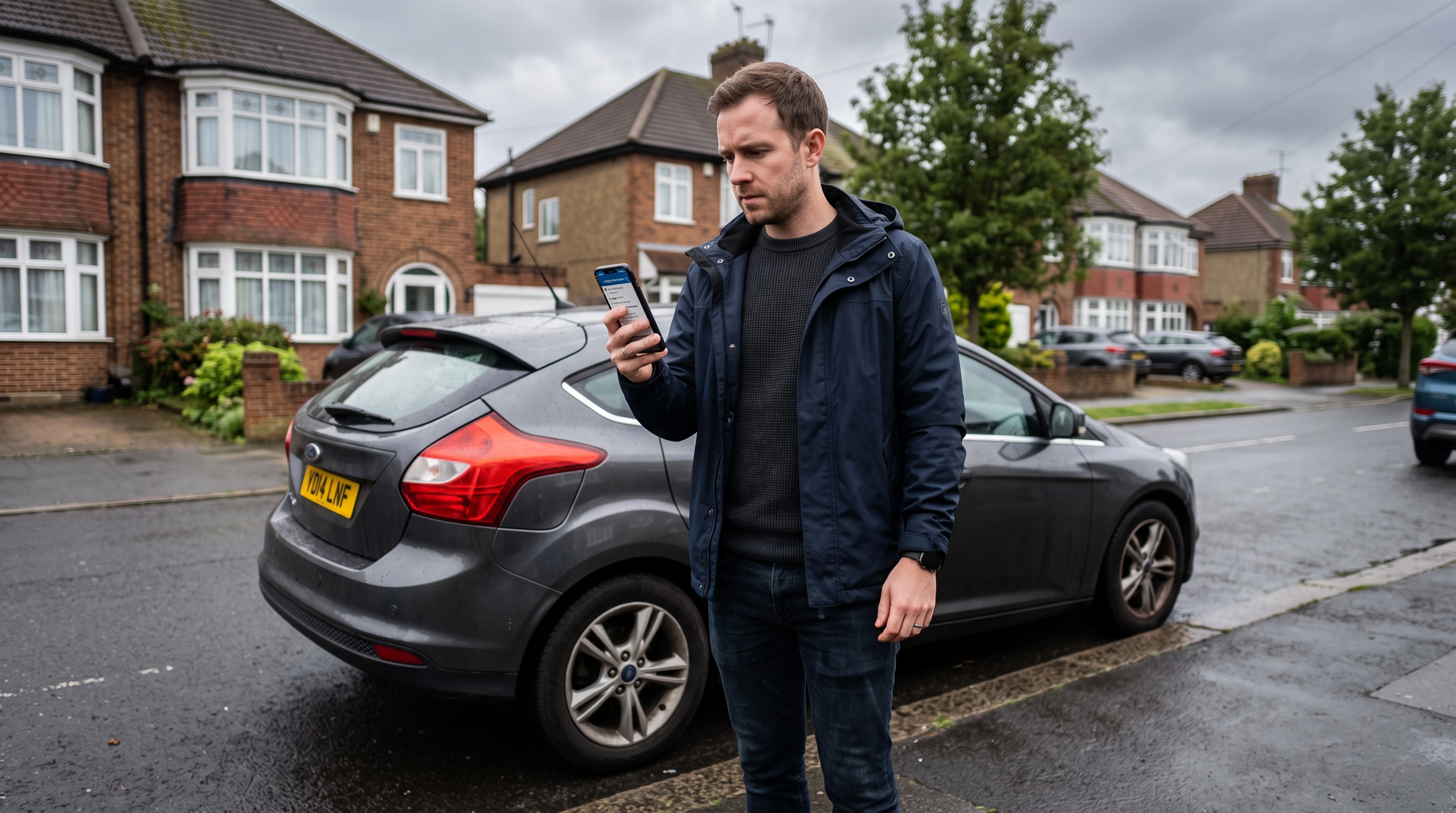
How to Spot a Clocked Car in the UK — and What the MOT History Tells You
You've found what looks like a great deal. Low mileage, clean bodywork, a competitive price. But something doesn't quite add up.
Maybe the pedal rubbers are worn through on a car that's supposedly only done 40,000 miles. Maybe the seller seems a little too eager to close the deal. Or maybe your gut is just talking to you.
Trusting that instinct has saved a lot of people a lot of money. Because mileage fraud — clocking, as it's known in the UK — is still widespread, and it can turn a bargain into a very expensive mistake.
The good news? Every case of mileage fraud leaves a paper trail. And it lives inside the car's MOT history.
But here's what most buyers don't realise: the free government MOT checker shows you the raw numbers. It doesn't calculate annual averages, flag anomalies, or tell you what those numbers actually mean. That gap is where fraud hides.
What Does "Clocked" Actually Mean?
A clocked car is one where the odometer has been deliberately wound back to show a lower mileage than the vehicle has actually covered. In older cars this meant physically turning back a mechanical dial. In modern vehicles it's done digitally — using cheap, widely available software — which makes it much harder to detect by eye alone.
Why does it matter so much? Because mileage is one of the biggest factors in a car's value. A 2018 Ford Focus with 30,000 genuine miles is worth substantially more than the same car with 90,000 miles on the clock. Wind it back, and you pocket the difference — at the buyer's expense.
The buyer inherits a car far more worn than advertised, facing major maintenance costs they didn't budget for, having paid a price that was never justified.
Note on legality: Knowingly selling a car while misrepresenting its mileage can constitute fraud under the Fraud Act 2006 in England, Wales and Northern Ireland, or common law fraud in Scotland. Dealers have additional obligations under the Digital Markets, Competition and Consumers Act 2024 (DMCC Act), which replaced the Consumer Protection from Unfair Trading Regulations 2008 from April 2025. The critical word is knowingly — the law targets deliberate misrepresentation, not innocent errors. This is not legal advice. If you believe you've been defrauded, contact Trading Standards or seek independent legal advice.
Why MOT History Is Your Best Defence
In England, Scotland and Wales, every MOT test is recorded by the Driver and Vehicle Standards Agency (DVSA). That record includes the date of the test, whether the car passed or failed, any advisories — and crucially, the mileage reading at the time of the test.
(MOT tests in Northern Ireland are administered by the DVA under a separate system.)
That creates a timeline. A verifiable, government-held record of what the odometer read at each annual test. A seller can change the number on the dashboard. They cannot change what was already logged with the DVSA.
Think of it like a paper trail of footprints. You might be able to brush a few away, but you can't erase all of them — and the pattern they leave tells the whole story.
The gap the free checker doesn't close: GOV.UK shows you a column of numbers. It doesn't tell you whether those numbers make sense for the car's age, usage pattern, or vehicle type. Spotting a problem requires you to do the maths yourself — and know what you're looking for.
The Red Flags to Look for in MOT History
Once you have the MOT history in front of you, these are the patterns that should raise concern.
1. Mileage That Drops Between Tests
This is the clearest signal. If an MOT from 2021 shows 78,000 miles and the next one from 2022 shows 61,000 miles — something needs explaining. Odometers go in one direction only.
Important caveat: A drop doesn't automatically mean fraud. MOT testers occasionally make data-entry errors — recording kilometres instead of miles, or transposing digits — which can create the appearance of a mileage fall. The difference between a typo and clocking usually shows in scale and pattern: a few hundred miles is very different from a drop of tens of thousands, especially if the mileage then stays suspiciously low across subsequent tests.
2. Suspiciously Slow Accumulation
The average car in Great Britain covers around 7,000–8,000 miles per year. A car recorded as covering 1,200 miles over twelve months is unusual — not impossible, but worth probing. If this pattern repeats across multiple years, it deserves scrutiny.
3. A Large Gap in MOT Records
In Great Britain, cars over three years old require an annual MOT. A gap of two or more years in the records might mean the car was sitting unused — or it might mean records are simply incomplete. Either way, you're working with less information than you should have.
4. Mileage That Doesn't Fit the Car's Story
If the seller says the car was used for motorway commuting but the annual mileage increments are tiny, that's a contradiction worth asking about directly.
5. The Pre-MOT Blind Spot
One gap the MOT system can't fully cover: cars returned from PCP or lease agreements during the first three years — before the first MOT is due. Vehicles are sometimes "corrected" before return specifically to avoid excess mileage penalties. If the car you're looking at was a recent lease return with no MOT history, verifying mileage against service records becomes especially important.
Remember: No single flag is conclusive on its own. But the more you see — and the more they cluster together — the stronger the case for a professional inspection before you commit.
A Real-World Example: How Clocking Shows Up in the Data
The following is an illustrative example with fictional data — it does not represent any real vehicle.
Imagine a 2016 Volkswagen Golf listed at 52,000 miles for £11,500. The MOT history tells a different story:
| MOT Date | Recorded Mileage | Annual Change |
|---|---|---|
| April 2019 | 48,200 miles | — |
| April 2020 | 61,400 miles | +13,200 |
| April 2021 | 75,900 miles | +14,500 |
| April 2022 | 88,100 miles | +12,200 |
| April 2023 | 54,300 miles | −33,800 ⚠ CLOCKED |
The car has almost certainly covered well over 90,000 miles. The seller is advertising it as 52,000.
Here's the number that matters: based on genuine mileage, this car is worth perhaps £3,000–4,000 less than the asking price. A £5 report would have flagged that drop immediately. That's thousands recovered for a £5 check.
Run the reg through MOTVerdict → Mileage anomalies flagged automatically, plain-English interpretation included.
Free MOT Check vs. Automated Report: What's the Difference?
You can check a car's basic MOT history for free on GOV.UK. So why would you need anything more?
For a quick check on a car with a clean, consistent history, the free tool does the job. But for anything more complex — or when you're about to spend several thousand pounds — the difference matters.
| What You Want to Know | Free Gov.uk Check | MOTVerdict Report (£5) |
|---|---|---|
| Raw MOT pass/fail history | ✓ Yes | ✓ Yes |
| Mileage at each test | ✓ Yes | ✓ Yes |
| Mileage anomaly flagged automatically | ✗ No — you spot it yourself | ✓ Yes — flagged and explained |
| Plain-English explanation of failures | ✗ No | ✓ Yes |
| Recurring fault patterns highlighted | ✗ No | ✓ Yes |
| Anomalies contextualised, not just flagged | ✗ No | ✓ Yes — pattern and scale assessed |
| Suggested questions to ask the seller | ✗ No | ✓ Yes |
| Overall verdict on the car's condition | ✗ No | ✓ Yes |
The free check gives you the raw data. The automated, plain-English report tells you what that data means — and what to do about it.
How to Check a Car's MOT History in 3 Steps
-
Get the registration number. Ask the seller for the full reg plate before agreeing to anything. You'll need this for any MOT history check. Don't proceed without it.
-
Pull the MOT history before you view the car. Do this from home, before you travel. Viewing a car in person creates psychological pressure to buy; checking the history from a distance lets you stay objective. If the mileage timeline looks wrong, you haven't wasted a trip.
-
Look for the patterns — or let the report do it for you. Work through the mileage figures year by year. Any drop, any suspicious plateau, any unexplained gap deserves a direct question to the seller. Or run the reg through MOTVerdict for an automated analysis in minutes.
Physical Clues That Back Up the Data
The MOT history is your starting point, not your finishing line. These checks can confirm or challenge what the data shows when you view the car in person:
- Pedal rubbers — worn smooth on a "low mileage" car is a tell
- Driver's seat bolster — heavy wear on the outer edge suggests high use
- Steering wheel — worn leather at the 12 o'clock position indicates regular driving
- Service stamps — do the dates and mileages in the service book match the MOT records?
- Tyre age — the DOT code on the sidewall shows the week and year of manufacture
- Gear knob — worn finish or a replacement knob may indicate higher mileage
No single sign is conclusive. But multiple signs of high use on a car with suspiciously low recorded mileage? That's the pattern you're looking for.
What to Do If You Suspect a Car Is Clocked
Don't:
- Accept the seller's explanation without documentary evidence
- Let urgency pressure you — "someone else is viewing it tonight" is a sales tactic
- Pay any deposit until you're satisfied the mileage is genuine
Do:
- Ask the seller directly — their reaction is often informative
- Request a professional pre-purchase inspection from an independent garage
- Report suspected fraud to Trading Standards or Action Fraud in England and Wales, or Police Scotland in Scotland
- Walk away — there will always be another car
What If You've Already Bought a Clocked Car?
This situation is more common than it should be — and your options depend on how you bought.
Bought from a dealer? You have the strongest protection. Three pieces of legislation work in your favour:
- Consumer Rights Act 2015 — the car must be as described. A vehicle misrepresented as having 52,000 miles when it has 90,000 is not as described. You may be entitled to a full refund within 30 days, or a price reduction or repair after that.
- Digital Markets, Competition and Consumers Act 2024 (DMCC Act) — which replaced the Consumer Protection from Unfair Trading Regulations 2008 from April 2025, prohibiting misleading commercial practices. A dealer knowingly misrepresenting mileage falls squarely within scope.
- Fraud Act 2006 — if the misrepresentation was deliberate, it may also constitute criminal fraud in England, Wales and Northern Ireland. In Scotland, common law fraud applies.
Contact the dealer first in writing. If they don't respond, escalate to Trading Standards.
Bought privately? Your statutory rights are more limited — private sales carry greater "buyer beware" responsibility. However, if the seller knowingly misrepresented the mileage, you may still have a civil claim for misrepresentation. Seek legal advice before pursuing this route.
In either case:
- Gather all evidence: the original listing, all messages with the seller, the MOT history
- Report to Action Fraud in England and Wales, or Police Scotland in Scotland, if you believe a crime has been committed
- Many solicitors offer free initial consultations — it's worth a call
This section is for general information only and does not constitute legal advice.
Final Thought: The Data Is There. Use It.
Clocking works because most buyers don't check. They look at the number on the dashboard and take it on trust. The sellers who commit mileage fraud rely on that trust entirely.
The MOT history removes that advantage. Every test the car has had in England, Scotland and Wales is on record — mileage and all. Checking it takes five minutes. Not checking it can cost you thousands.
The data exists to protect you. The question is whether you look at it before you buy.
Frequently Asked Questions
Is it illegal to sell a clocked car in the UK? Knowingly selling a car while misrepresenting its mileage can constitute fraud under the Fraud Act 2006 in England, Wales and Northern Ireland, or common law fraud in Scotland. Dealers have additional obligations under the Digital Markets, Competition and Consumers Act 2024 (which replaced the Consumer Protection from Unfair Trading Regulations 2008 from April 2025). The key word is knowingly — an innocent error is treated differently from deliberate deception. This is not legal advice — contact Trading Standards or a solicitor if you believe you've been defrauded.
Does the free gov.uk MOT check show mileage? Yes — GOV.UK's free tool shows the mileage recorded at each MOT test, but presents it as a raw list with no analysis. You need to compare the figures yourself and know what patterns to look for.
Does a drop in MOT mileage always mean a car is clocked? Not always. MOT testers occasionally make data-entry errors — recording kilometres instead of miles, for example — which can create the appearance of a mileage drop. Context matters: a small drop with a plausible explanation is very different from a sustained fall of tens of thousands of miles followed by suspiciously low current mileage.
What if a car has no MOT history at all? In Great Britain, cars under three years old don't require an MOT. In Northern Ireland, the first MOT is required after four years. For older vehicles in either case, a complete absence of records is a significant red flag and warrants caution or an independent inspection before purchase.
What should I do if I've already bought a clocked car? If bought from a dealer, you may have rights under the Consumer Rights Act 2015 — the car was not as described. If bought privately, options are more limited but a civil claim for misrepresentation may still be possible. Report to Trading Standards or Action Fraud and consider seeking legal advice.
Does MOTVerdict work for all UK cars? MOTVerdict uses DVSA data, which covers England, Scotland and Wales. MOT tests in Northern Ireland are administered by the DVA under a separate system. MOTVerdict works for any vehicle with at least one DVSA-registered test — the vast majority of cars over three years old in Great Britain.
Check This Car Before You Buy
Does the mileage add up? Get an automated, plain-English breakdown of the full MOT history — mileage anomalies flagged, failure patterns explained, seller questions generated. One report, £5.
UNCOVER HIDDEN MILEAGE ISSUES FOR £5 →
Choosing between two cars? Compare the full MOT histories of both vehicles in a single report. See which one has the cleaner record before you decide.