Most people know that a car can pass or fail its MOT. What fewer people realise is that defects are graded by severity — and since 2018, test failures are split into two distinct levels: Major and Dangerous.
A dangerous defect means the vehicle was judged an immediate threat to road safety on the day of the test. If you spot one in a used car's MOT history, knowing how to interpret what happened next could be the difference between buying a solid motor and inheriting an illegal, expensive nightmare.
How the MOT defect system actually works
Since May 2018, every observation a tester makes during an MOT falls into one of four categories — but only two of them cause a failure:
- Advisory — a component is wearing or deteriorating but hasn't yet reached the threshold for a defect. The car passes. Advisories are not formal defects — they are documented warnings about future wear.
- Minor — a formal defect that doesn't significantly affect safety or the environment. The car passes, but the defect is recorded on the certificate.
- Major — a significant defect that affects road safety or the environment. The car fails and must be repaired before it can be used on the road.
- Dangerous — a defect that poses a direct and immediate risk to road safety. The car fails and must not be driven until repaired.
The distinction matters: Advisories and Minor defects result in a pass. Major and Dangerous defects result in a fail. A dangerous defect is not a borderline call — it is the tester's professional judgement that the vehicle, as presented, should not be on the road.
What are the legal consequences of driving with a dangerous defect?
This is where many buyers underestimate the stakes. In the UK, driving a vehicle with a known dangerous defect is a criminal offence — regardless of whether the car holds a current MOT certificate. Penalties include:
- A fine of up to £2,500
- 3 penalty points on the driver's licence
- Potential disqualification from driving
- Invalidation of motor insurance — meaning any accident could leave the driver personally liable for all costs
This matters when you're reading a used car's history. A dangerous defect means the car legally should not have been driven from the test station. Every day between the failure and the repair represents a period when the car either sat undriven — or was being used illegally on public roads.
What kinds of defects are classed as dangerous?
Common dangerous defects include:
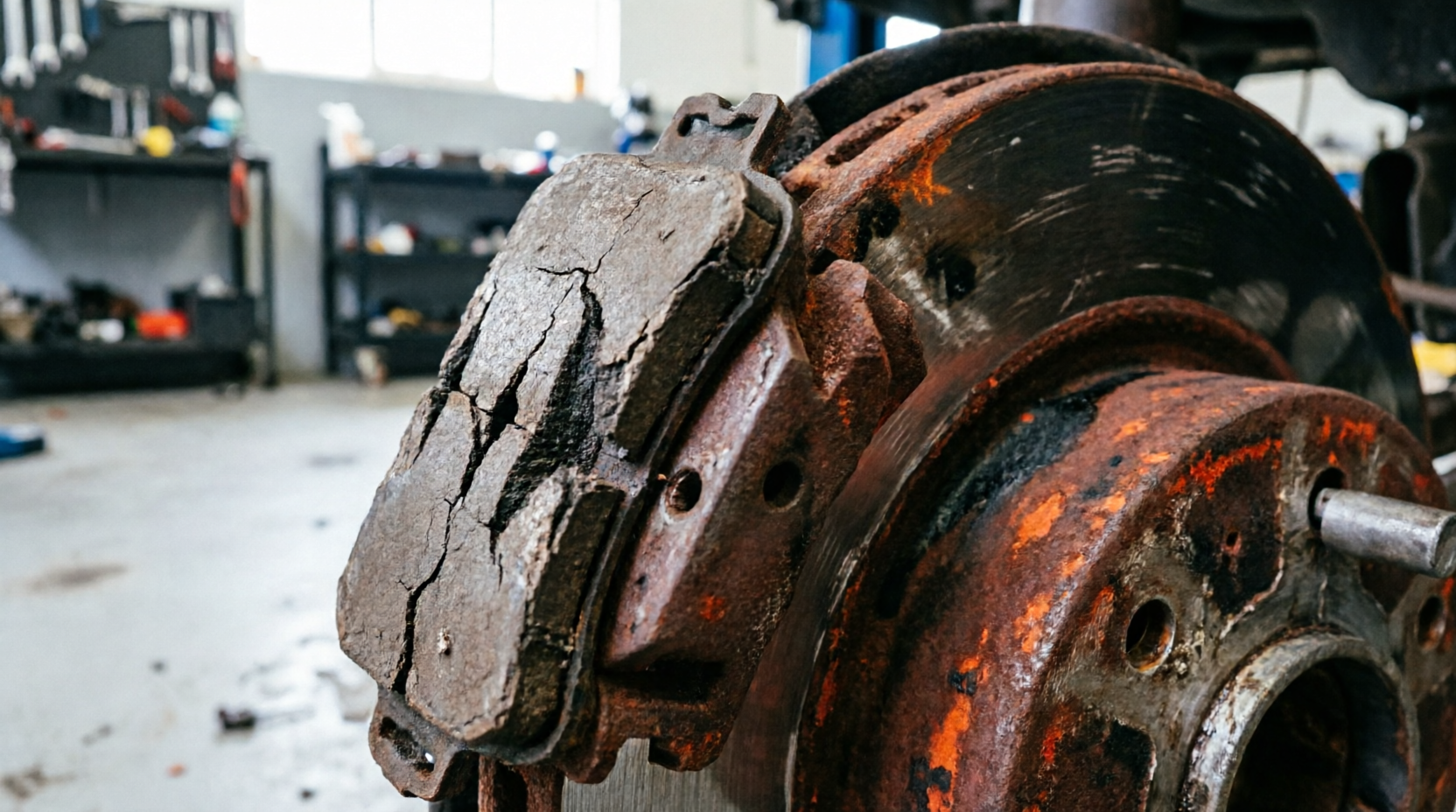
- Brake failure — pads worn below 1.5mm, severely corroded discs, or damaged brake pipes
- Steering failure — excessive play or components close to structural failure
- Tyre condition — exposed cord, severe sidewall damage, or tread below the 1.6mm legal minimum across the full width
- Suspension failure — ball joints, track rod ends, or components with play that creates an immediate safety risk
- Seatbelt failure — belts that don't lock, retract, or are severely damaged
Does a dangerous defect mean you shouldn't buy the car?
Not automatically. But it demands careful, systematic investigation — not a quick glance at the pass/fail result.
What matters is not whether a dangerous defect appears in the history. It's what happened immediately after — and whether the same problem has ever come back.
✅ Reassuring: repaired within 24–72 hours
If the car failed with a dangerous defect on a Monday and passed its retest by Wednesday or Thursday, that's a meaningful signal. A brake pad replacement or tyre change takes hours, not weeks. A rapid retest turnaround suggests the owner treated a safety-critical failure as exactly that — urgent. This is how a responsible owner responds to a dangerous defect.
⚠️ Concerning: retest took more than a week
A delay of more than a week between a dangerous defect failure and a retest raises an uncomfortable question: was the car being driven during that period? Most dangerous defects are straightforward to repair. A week-long gap is not explained by workshop availability alone — and during that time, the car either sat unused or was being driven with a known, illegal safety defect.
🔴 Serious red flag: the same defect category reappears
If the same category of dangerous defect appears at more than one MOT — brake failure in 2021, brake failure again in 2023 — the repair either wasn't completed properly, or the owner is systematically deferring safety-critical maintenance. This is the pattern that should make you reconsider the purchase entirely.
🔴 Serious red flag: dangerous defect at the most recent MOT
If the most recent MOT recorded a dangerous defect with no evidence of a subsequent retest or repair, the vehicle may currently be in an unsafe — and illegal — condition. Verify this before viewing, and certainly before any money changes hands.
Spotted a dangerous defect on a car you're considering?
Don't make a decision based on a single data point. MOTVerdict reads the complete history — every defect category, every retest interval, every mileage reading — and tells you whether the pattern is reassuring or a reason to walk away. Get the risk verdict on this car →
Questions to ask the seller if you find a dangerous defect
If you're viewing a car with a dangerous defect in its history, come prepared. These questions signal that you've done your research — and that you understand the legal position:
- "The MOT history shows a dangerous defect in [year] — do you have the repair receipts?" A legitimate seller will have documentation. Vagueness or defensiveness is a warning sign.
- "How quickly was it repaired after the failure?" You're listening for hours or days — not weeks.
- "Has that component been inspected since the repair?" For brakes or steering, a subsequent service invoice adds confidence that the fix held.
- "Was the car used between the failure and the retest?" You won't always get an honest answer — but the question tells the seller you know exactly what a dangerous defect means legally.
Why the government's free MOT check isn't enough
The DVSA's free tool at gov.uk shows you the raw data — the date of the failure, the defect category, and the date of the retest. What it doesn't do is calculate the gap between failure and repair, identify whether the same defect category has reappeared across multiple years, or tell you whether the pattern points to responsible ownership or systematic neglect.
That analysis requires reading several years of entries, cross-referencing dates and defect types, and knowing what the intervals actually mean in practice. Done manually, it takes time and expertise. Done quickly, it's easy to miss the detail that changes your decision entirely.
MOTVerdict runs this analysis automatically — calculating retest intervals, identifying recurring defect patterns, and delivering a plain-English verdict in under 60 seconds. The DVSA gives you the data. MOTVerdict tells you what it means — and whether a £5,000 purchase is a sound investment or a future liability waiting to happen.
Checking a car with a dangerous defect in its history?
The DVSA shows you raw entries. MOTVerdict calculates retest intervals, identifies recurring failure patterns, and tells you in plain English whether this car is a Good buy, worth Proceeding with caution, or one to Walk away from — in under 60 seconds.
Get your full MOT verdict — £5 →